What the Bible Says About Thanksgiving and Gratitude
Biblical thanksgiving is both a response to God's goodness and a practice carried into ordinary life. Two familiar passages express those dimensions clearly. First Thessalonians 5:18 calls believers to give thanks in every circumstance, while Psalm 100:4 pictures worshipers entering God's gates with thanksgiving and praise. Neither verse asks readers to pretend that pain is pleasant. Together, they describe gratitude as honest trust, remembered grace, and a way of approaching God.
What does 1 Thessalonians 5:18 mean?
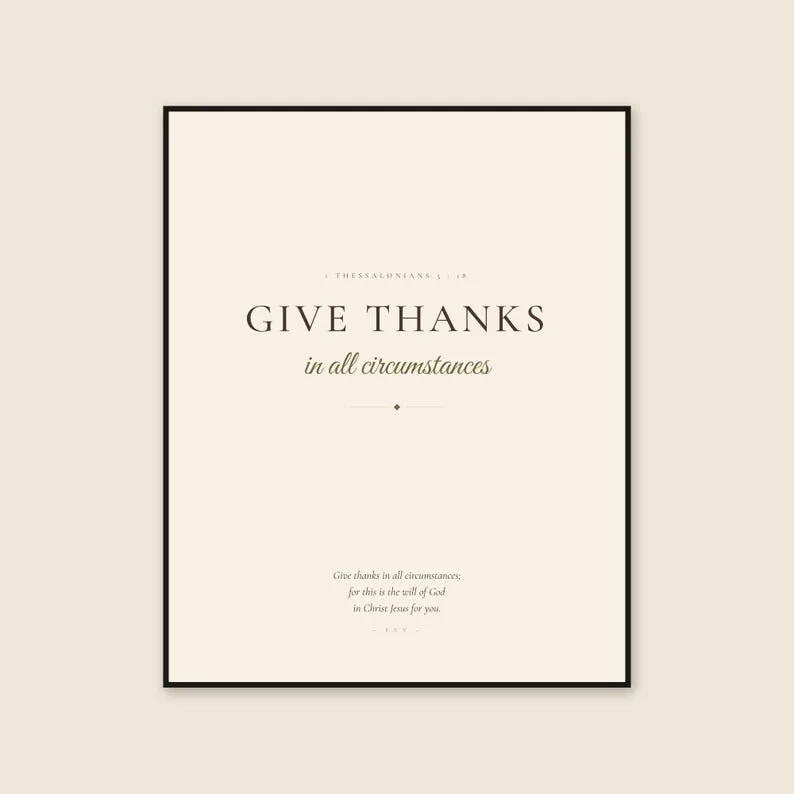
First Thessalonians 5:18 teaches that gratitude can remain part of faithful life in every circumstance. The KJV reads, "In every thing give thanks: for this is the will of God in Christ Jesus concerning you." The wording matters. Paul says to give thanks "in" every thing, not to call every event good or to deny grief, injustice, or loss. The verse appears within a series of brief instructions that also includes rejoicing, praying, testing what is good, and holding fast to it. Gratitude is therefore not an isolated feeling that must be produced on demand. It belongs to a steady pattern of attention to God. The first readers in Thessalonica knew pressure and uncertainty, so the instruction was not written for easy conditions alone. Giving thanks can mean recognizing sustaining grace, faithful people, daily provision, or a reason for hope while still naming what hurts. The verse calls for trust without requiring emotional pretense.
Does "give thanks in all circumstances" include suffering?
Yes, the instruction includes suffering, but it does not require gratitude for evil itself. Paul does not tell grieving people to celebrate harm or suppress lament. Elsewhere in Scripture, faithful prayer includes protest, sorrow, and questions, so thanksgiving should not be used to silence those responses. In difficulty, gratitude may be small and specific: help received from another person, strength for the present day, a remembered promise, or the freedom to speak honestly before God. It can coexist with tears. This distinction protects the verse from becoming a demand for cheerfulness. The practice is not a verdict that everything is as it should be. It is an orientation that looks for God's presence and gifts even when much remains unresolved. For some readers, that recognition comes slowly. The language of "in every thing" makes room for gratitude within the circumstance, not approval of every cause or consequence of suffering.

What does Psalm 100:4 mean by entering with thanksgiving?
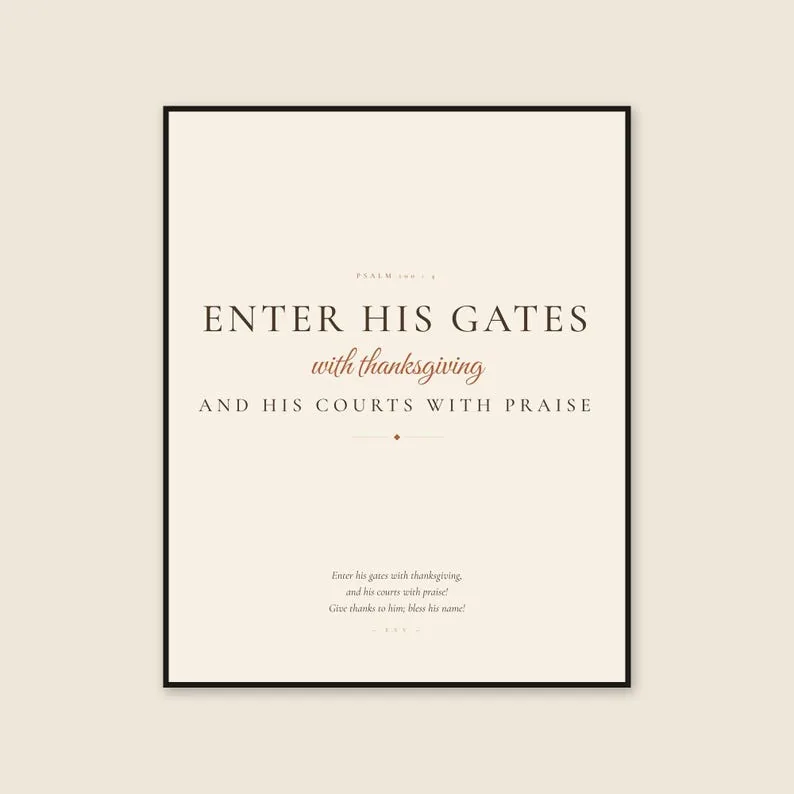
Psalm 100:4 presents thanksgiving as the way worshipers approach God: "Enter into his gates with thanksgiving, and into his courts with praise: be thankful unto him, and bless his name." Gates and courts evoke movement toward a place of worship. The verse invites people to cross that threshold by remembering who God is and responding with thanks. The reason follows in verse 5: "For the LORD is good; his mercy is everlasting; and his truth endureth to all generations." Praise is grounded in God's character, not merely in a favorable mood. The psalm also addresses "all ye lands," giving its invitation a communal and expansive character. Thanksgiving is something voiced together, where memory can be shared and renewed. For readers today, the image can shape prayer at home or worship in a congregation. One approaches not by ignoring need, but by naming goodness, mercy, and faithfulness before asking what comes next.

How are gratitude and praise different in the Bible?
Gratitude gives thanks for God's gifts and actions, while praise honors God for who God is. Psalm 100 places the two together rather than treating them as rivals. Worshipers enter with thanksgiving, enter the courts with praise, give thanks, and bless God's name. A person may thank God for provision, guidance, forgiveness, or the care of a community. Praise may then dwell on goodness, mercy, faithfulness, wisdom, or holiness. In practice, the movements often overlap. Remembering a gift reveals something about the giver, and reflecting on God's character awakens gratitude. This pattern can keep thanksgiving from becoming only a list of pleasant circumstances. It also gives gratitude a deeper foundation when circumstances change. A simple practice is to name one gift and then the quality of God it brings to mind. The point is not to force a feeling, but to give truthful attention to grace and to let that attention shape prayer.

Frequently asked questions
What is a good Bible verse for Thanksgiving?
Psalm 100:4 is especially fitting: "Enter into his gates with thanksgiving, and into his courts with praise: be thankful unto him, and bless his name." First Thessalonians 5:18 is another clear choice because it connects giving thanks with every circumstance, not only a holiday meal.
Does the Bible say to be thankful for everything?
First Thessalonians 5:18 says to give thanks "in every thing." This supports gratitude within every circumstance, but it does not require calling evil good or pretending that loss does not hurt. Biblical thanksgiving can exist beside grief, lament, moral clarity, and a desire for change.
How can I practice biblical gratitude each day?
Name one specific gift, connect it to God's character, and respond in a short prayer or act of care. The gift may be ordinary, such as food, rest, work, help, beauty, or a needed conversation. Specific attention keeps gratitude grounded and allows it to grow without becoming forced positivity.
Bring it to your wall
Enter His Gates with Thanksgiving Psalm 100:4, Thanksgiving Scripture Print, Harvest Bible Verse Wall Art, Christian Fall Decor
Give Thanks in All Circumstances 1 Thessalonians 5:18, Gratitude Scripture Print, Christian Fall Bible Verse Wall Art
Micah 6:8 Wall Art He Has Told You O Man What Is Good Do Justice Love Kindness Walk Humbly Scripture Print Sage Green Christian Dad Gift