The Meaning of Psalm 23, The Lord Is My Shepherd
Psalm 23 begins with a sentence so familiar that its depth can be easy to overlook: "The LORD is my shepherd; I shall not want." Traditionally linked with David, the psalm speaks in the close language of a shepherd and sheep, then moves through rest, danger, welcome, and overflowing provision. It is read at funerals, beside hospital beds, and in private grief because it does not deny the valley. Instead, it gives a companionable picture of God's presence within it.
What does "The LORD is my shepherd" mean?
The first line of Psalm 23 makes a personal confession of trust. In the ancient world, shepherding involved guiding animals toward food and water, protecting them from danger, and remaining attentive to creatures that could easily wander. Calling the LORD a shepherd therefore speaks of care that is active, near, and practical. The next phrase, "I shall not want," does not mean a life will contain every desired thing. It says that under the shepherd's care, the psalmist is not abandoned to ultimate lack. The image also connects to David's traditional identity as a shepherd before he became king, although the psalm's strength does not depend on knowing that biography. Its language is intimate rather than abstract. God is not described from a distance as a principle of safety. The shepherd walks with, leads, restores, and receives the one who trusts him.
What do green pastures and still waters represent?
Psalm 23:2 says, "He maketh me to lie down in green pastures: he leadeth me beside the still waters." These are images of rest and refreshment, but they are not merely decorative landscapes. A shepherd must know where animals can safely eat and drink. The verbs matter: the shepherd makes the sheep lie down and leads them to the waters. Rest is presented as something received under wise care, not simply seized by effort. The following line, "He restoreth my soul," broadens the picture from physical relief to renewed life. For readers facing exhaustion, illness, or grief, the pasture is not a demand to feel peaceful. It is an image of provision that can be trusted even when peace is not immediately felt. The psalm does not rush from need to abundance. It lets restoration arrive through guidance, rest, and the steady presence of the shepherd.
What is the valley of the shadow of death in Psalm 23?
The psalm's comfort becomes most direct in verse 4: "Yea, though I walk through the valley of the shadow of death, I will fear no evil: for thou art with me." The image may refer to a dark, dangerous ravine, and its language has naturally become associated with death and deep grief. Crucially, the psalmist walks through the valley. The verse does not say that faithful people will never enter frightening places. It names the fear plainly, then grounds courage in companionship: "for thou art with me." This is why Psalm 23 is so often read at funerals and during hospital visits. It does not offer a quick explanation for suffering. It offers presence. The rod and staff mentioned next are tools of guidance and protection, not symbols of a painless path. Their comfort lies in the shepherd's nearness when a way forward is difficult to see.
What does "my cup runneth over" mean?
In the final movement of Psalm 23, the scene changes from field to table. The psalmist is welcomed as an honored guest: "Thou preparest a table before me in the presence of mine enemies." Then comes the remembered line, "my cup runneth over." The overflowing cup expresses abundance, hospitality, and a goodness that exceeds bare survival. Its setting matters. The table is prepared while enemies are still present, so the psalm does not imagine that every threat has disappeared. Instead, welcome and provision are possible even amid unresolved trouble. The closing words, "Surely goodness and mercy shall follow me all the days of my life," turn the psalm toward the future. They offer more than a single moment of relief. Together with the overflowing cup, they describe a life pursued by steadfast goodness, held within a homecoming that is both present comfort and enduring hope.
Frequently asked questions
What is the main message of Psalm 23?
Psalm 23 expresses trust in God's personal care through the image of a shepherd. It speaks of rest, guidance, protection in danger, welcome, and enduring goodness. Its central comfort is not the absence of hardship, but the presence of the shepherd through it.
Why is Psalm 23 read at funerals?
Psalm 23 names grief and danger without losing sight of God's presence. Its words about the valley of the shadow of death, comfort, goodness, and dwelling with the LORD give mourners language that is honest, gentle, and hopeful. It can be read aloud in a service, at a bedside, or in a family gathering.
What does my cup runneth over mean?
The phrase describes abundance and generous welcome. In Psalm 23, the overflowing cup appears at a table prepared even while enemies remain nearby. It expresses a goodness that goes beyond mere survival and can be received amid unresolved difficulty. The image ends the table scene with gratitude and trust.
Bring it to your wall
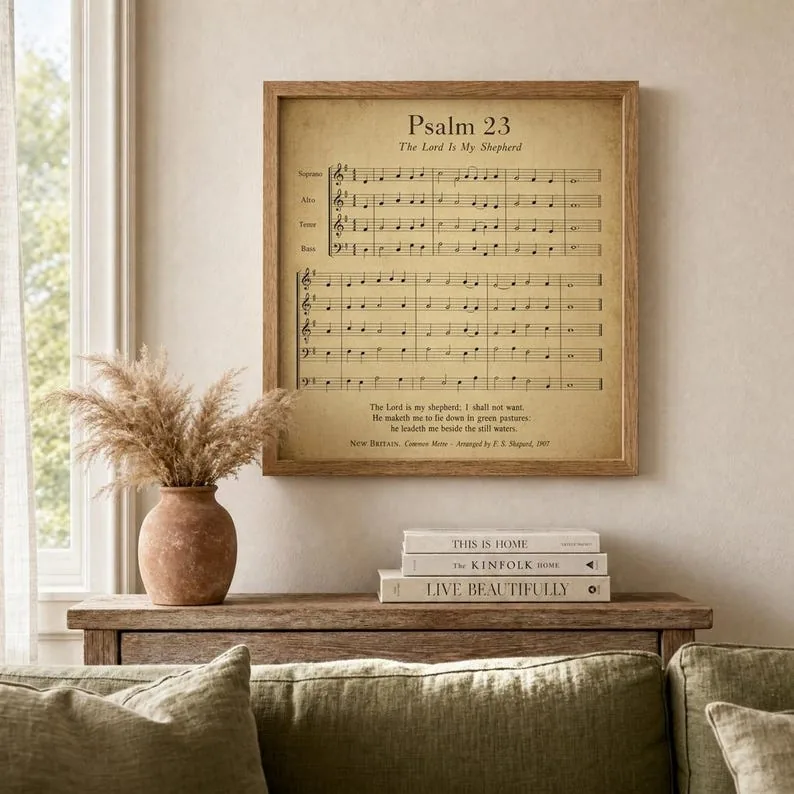
Psalm 23 Print, The Lord Is My Shepherd, Vintage Antique Christian Scripture Wall Art, Bible Verse Gift
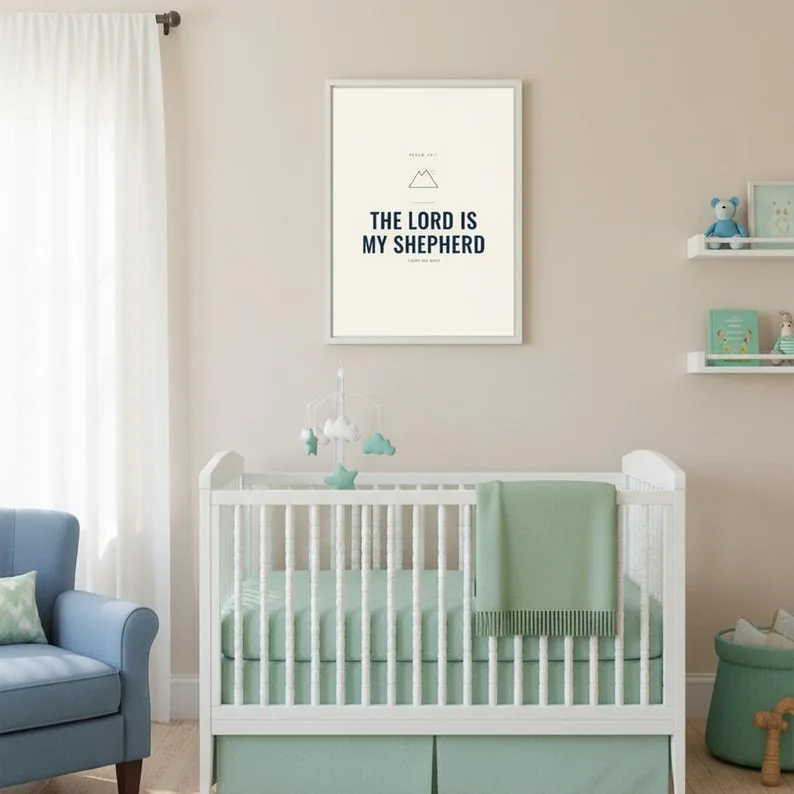
The Lord Is My Shepherd Psalm 23:1 Wall Art Christian Boys Room Print Scripture Decor Digital Download

Fruit of Spirit Set 9 Bible Verse Wall Art Aesthetic Christian Botanical Prints Galatians 5 22 Modern Gallery Wall Kitchen Decor