The Stories Behind Classic Hymn Lyrics on the Wall
A familiar hymn can hold more than melody. A few lines may recall a grandparent's voice, the sound of a choir finding its balance, or a service that marked a turning point. Psalm 103:1 gives a room's quieter memory a scriptural counterpart. Amazing Grace and the Doxology have endured because their words are direct enough to sing together and deep enough to revisit over a lifetime. Their histories add another layer, connecting domestic beauty with lived faith and musical tradition.
What is the story behind Amazing Grace?
Amazing Grace was written by John Newton, an Anglican clergyman who had earlier participated in the Atlantic slave trade. His conversion and later ministry did not erase that history, and the hymn is most honestly received with that moral complexity in view. Newton wrote the text in 1772 for use in his parish at Olney, England, and it appeared in the 1779 collection Olney Hymns. Its language of being lost and found, blind and able to see, comes from a personal testimony of grace and repentance. The tune now most associated with the words was joined to them later in America, which helped make the hymn widely known. On a wall, the text can be more than a nostalgic object. It can invite reflection on mercy that is neither vague nor cheap, and on the slow, continuing work of becoming changed.
Who wrote the Doxology, Praise God From Whom All Blessings Flow?
The words commonly called the Doxology were written by Thomas Ken, an English bishop and poet. They first appeared in 1674 as the final stanza of a morning hymn and later became attached to an evening hymn as well. The opening line, "Praise God, from whom all blessings flow," is concise enough for a congregation to sing from memory, yet it gathers heaven, earth, and the Trinity into one small act of praise. Over time, the stanza was set to the familiar Old 100th tune, giving it a place in worship across many traditions. Its endurance comes partly from that economy. The lyric does not need a particular season or occasion to be meaningful. It makes a simple response to gratitude available wherever it is sung. A typographic or sheet music inspired rendering can preserve that sense of shared voice, even in a quiet room.
Why do hymn lyrics make meaningful wall art?
Hymn texts carry memory through both language and sound. A person may read a line silently and still hear the tempo, harmonies, or voices connected to it. That makes hymn wall art an especially thoughtful choice for musicians, choir members, grandparents, and families with a beloved church song. Sheet music details add another dimension, suggesting rehearsal rooms, worn hymnals, and the craft of singing together. The visual form does not need to recreate a specific service to feel personal. A restrained arrangement with warm paper tones can let the words remain central while giving them a sense of history. Unlike a song heard once in a gathering, a lyric on the wall can be encountered slowly, in passing. Over time, it may become a small companion for gratitude, remembrance, or the ordinary work of making a home feel inhabited by meaning.
How can you choose a hymn lyric for a gift?
Begin with a shared association rather than trying to identify the most famous hymn. Think about a song sung at a wedding, a funeral, a childhood church, a choir concert, or around a piano after dinner. Amazing Grace may suit someone reflecting on mercy and a long life of faith. The Doxology may suit a host, a musician, or a household where gratitude is a daily practice. Consider how much text the recipient would want to live with. One recognizable stanza often leaves more room for memory than a full page of lyrics. Visual style matters as well. Antique hymn textures can feel rooted and archival, while a simpler type setting may fit a contemporary room. The best choice feels less like a broad religious statement and more like a familiar song offered back to someone who knows why it matters.
Frequently asked questions
Who wrote Amazing Grace and when?
John Newton wrote the words of Amazing Grace in 1772 while serving in Olney, England. They were published in 1779 in Olney Hymns. The melody most people recognize today was paired with the text later in America. Newton had previously participated in the Atlantic slave trade, a history that gives the hymn serious context.
Who wrote Praise God From Whom All Blessings Flow?
Thomas Ken wrote the text in 1674 as part of a morning hymn. The final stanza became widely known as the Doxology and is often sung to the Old 100th tune in churches across several Christian traditions. It remains one of the most enduring short hymns in English speaking worship.
What hymn lyrics make a good gift for a choir member?
Choose a hymn connected to the recipient's own musical memory, perhaps a song often sung by their choir or at a meaningful service. Amazing Grace and the Doxology are lasting choices because their words and melodies are widely shared and easily remembered.
Bring it to your wall
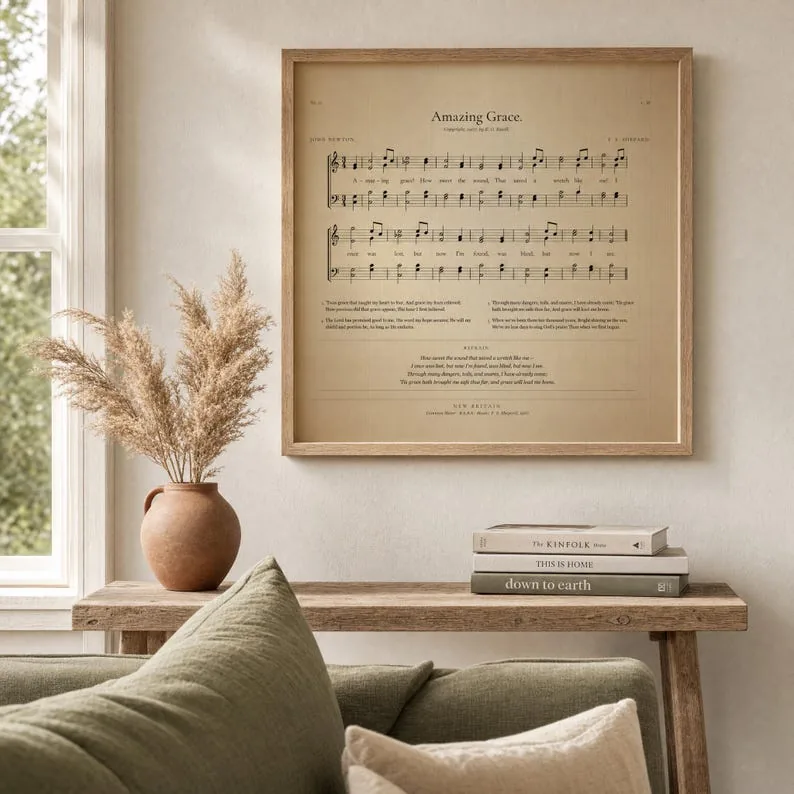
Amazing Grace Hymn Print, Vintage Sheet Music Wall Art, Antique Hymnal Page, Christian Faith Decor, Digital Download
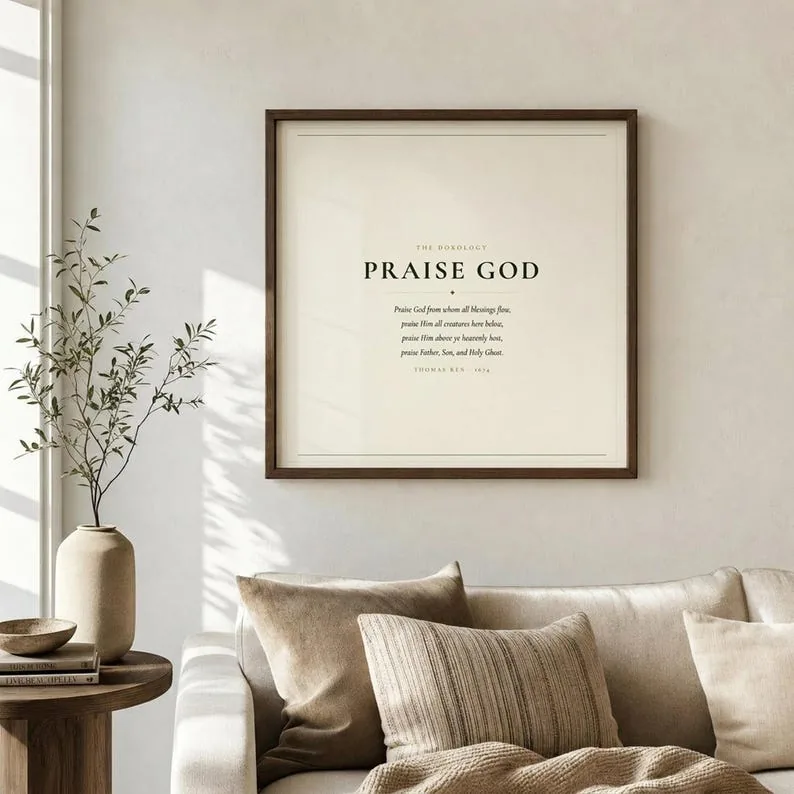
Praise God from Whom All Blessings Flow, Doxology Print, Christian Hymn Wall Art, Song Lyric Art, Baptism Gift, Faith Decor
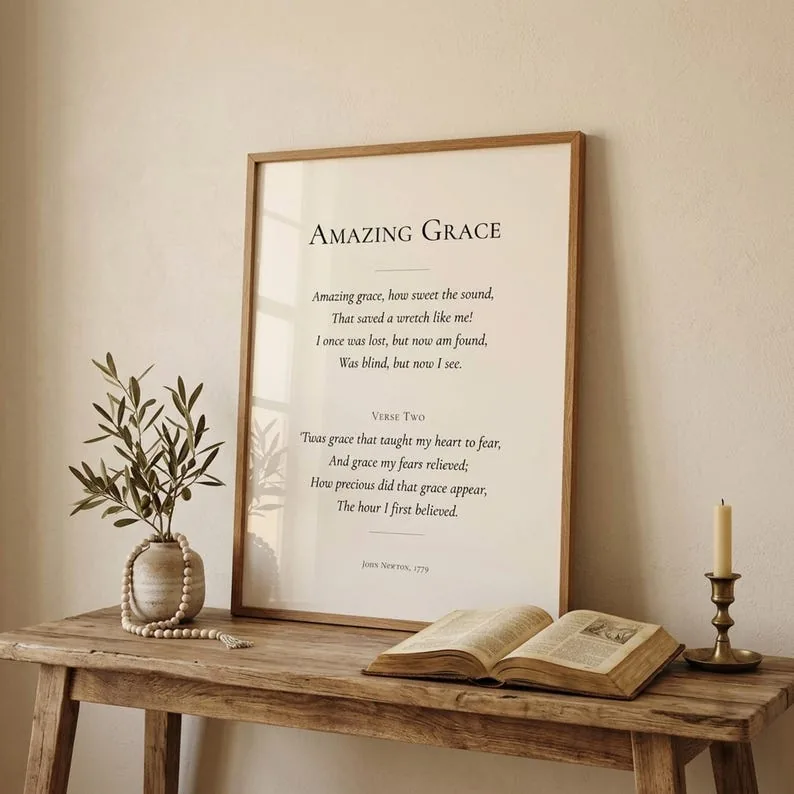
CUSTOM Christian Hymn Art, Personalized Hymn Lyrics Wall Art Print, Custom Bible Verse Print, Modern Christian Wall Art Pastor Gift