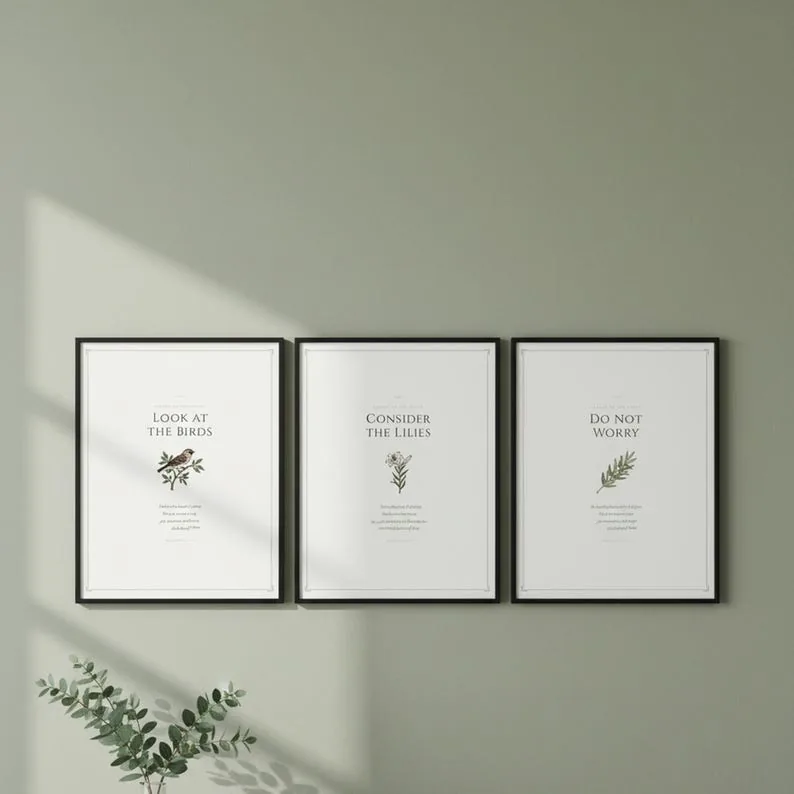
What "Consider the Lilies" Means in Matthew 6
"Consider the lilies of the field, how they grow" is one of Scripture's most observant invitations. In Matthew 6:28 to 29, Jesus draws attention to flowers that neither labor nor spin, then places their beauty beside Solomon's splendor. The verse does not ask us to ignore practical responsibilities. It asks us to look again at the natural world, where beauty is received rather than anxiously assembled. That quiet shift explains why the passage continues to belong so naturally among botanical imagery.
What is the context of "Consider the lilies"?
Matthew 6:28 to 29 sits in the Sermon on the Mount, within a longer teaching about worry. The surrounding passage, Matthew 6:25 to 34, names everyday concerns about food, drink, and clothing, concerns that were as immediate in the first century as they are now. Jesus turns to birds and flowers not to dismiss those needs, but to challenge the belief that anxiety can secure what we need. The King James Version asks, "And why take ye thought for raiment? Consider the lilies of the field, how they grow; they toil not, neither do they spin:" The question is gently practical. Clothing matters, yet it cannot bear the weight of ultimate trust. The image of lilies interrupts an anxious inward gaze with a patient outward one. It directs attention toward creation, provision, and the limits of personal control, then returns the listener to the present day.
What do the lilies represent in Matthew 6?
The lilies represent the unforced beauty of creation and the care that sustains it. Jesus does not identify a particular flower species, and the word may have included several wildflowers familiar in the hills of Galilee. That open image is part of its strength. A field flower is brief, local, and uncelebrated, yet it is described as more beautifully arrayed than royal splendor. The next verse makes the comparison explicit: "That even Solomon in all his glory was not arrayed like one of these." The point is not that human craft or clothing is wrong. Rather, it exposes the thinness of measuring worth by display, effort, or status. Lilies offer a different kind of abundance, one that appears without performance. Their beauty becomes a small witness to provision. Looking at them can make room for gratitude before a problem has been solved.
Does this verse tell people not to plan?
No, Matthew 6 does not set trust against wisdom, work, or planning. The passage addresses the habit of being consumed by worry, not the ordinary care of arranging a meal, paying a bill, or preparing for a change. Its closing instruction, "Take therefore no thought for the morrow," follows a sustained invitation to seek God's kingdom first. In the language of the chapter, worry narrows attention until tomorrow seems like the only reality. The lilies widen it again. They remind the reader that life is not maintained by vigilance alone. This can be especially helpful when the verse is used in a home, where it is seen repeatedly rather than read once in a difficult moment. A floral scripture print need not function as a command to feel calm. It can be a visual pause, a nudge toward proportion, prayer, and the grace of enough for today.
Why do botanical interiors suit the lilies verse?
Botanical decoration and this passage share an attention to ordinary forms: stems, petals, seasons, light, and the varied shapes of a field. That affinity has made "Consider the lilies" especially loved in cottage inspired rooms and quiet, collected interiors. The connection is more than decorative. Jesus chose a living image close at hand, so a botanical setting can preserve the verse's original movement from observation to trust. William Morris influenced patterns are well suited to that mood because they honor foliage as a repeating, handmade language rather than a loud backdrop. Warm ivory paper, muted greens, and open margins can let the words breathe alongside the illustration. The visual beauty should not compete with the teaching. At its best, it simply helps a room hold the same small invitation that the verse offers: notice what has been given, and let beauty interrupt worry for a moment.
Frequently asked questions
What does Consider the lilies of the field mean?
Jesus uses flowers to teach about trust in God's care. The lilies do not create their beauty through anxious striving, yet they are richly clothed. The comparison invites people to bring their needs honestly to God instead of letting worry rule their attention.
Where is Consider the lilies in the Bible?
The phrase appears in Matthew 6:28 in the Sermon on the Mount. It belongs to Matthew 6:25 to 34, where Jesus speaks about worry, daily needs, birds, flowers, and seeking God's kingdom before being consumed by tomorrow. It also includes his invitation to receive each day's concerns in that light.
Are the lilies in Matthew 6 a specific kind of flower?
The passage does not provide a botanical identification. The word likely referred broadly to flowering plants familiar to Jesus' listeners in the region. The teaching depends on their visible beauty and brief life, not on one precise species. The flowers are a shared image of creation rather than a field guide.
Bring it to your wall
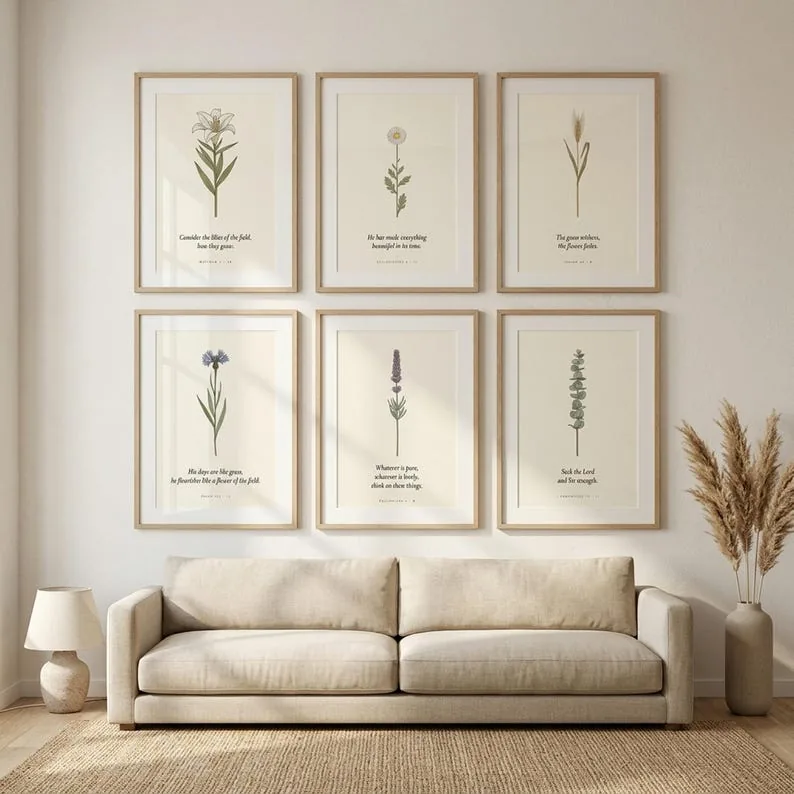
Wildflower Wall Art Set of 6, Consider the Lily Scripture Prints, Botanical Bible Verse Gallery, Cottagecore Digital Download

Consider the Lilies Wall Art Matthew 6:28 Scripture Print Sage Green Christian Decor Vintage Bible Verse Printable Download

Fruit of Spirit Set 9 Bible Verse Wall Art Aesthetic Christian Botanical Prints Galatians 5 22 Modern Gallery Wall Kitchen Decor