The Christmas Story in Luke 2 and Isaiah 9:6, Verse by Verse
The Christmas story in Luke 2 moves from an imperial decree and a crowded Bethlehem to a child laid in a manger, shepherds in the fields, and angels praising God. Each detail helps answer why Christians understand the birth of Jesus as good news for ordinary people and for the whole world. Isaiah 9:6 adds an older prophetic promise, naming the coming child through titles of wisdom, power, care, and peace. Read together, the passages hold humility and hope in the same scene.

Why did Mary and Joseph travel to Bethlehem in Luke 2?
Mary and Joseph traveled to Bethlehem because Caesar Augustus ordered a registration, and Joseph went to the city associated with David's family line. Luke 2:4 says Joseph was "of the house and lineage of David." This political order places the birth of Jesus in a specific public setting, not in an undefined legendary past. It also connects Bethlehem with the biblical story of David, Israel's shepherd king. Luke does not portray the journey as comfortable or grand. Mary is expecting a child, the couple is away from home, and the decisions of an empire shape their movement. Yet the Gospel's attention soon leaves Caesar and settles on a newborn child. That contrast is central to the chapter. Authority appears to belong to the ruler who can move populations, but the story identifies lasting hope in a family arriving without status or ceremony. Bethlehem becomes the meeting place of royal expectation and quiet vulnerability.
What does the manger in Luke 2:7 mean?
The manger shows that Jesus entered the world in humble and materially limited circumstances. Luke 2:7 says Mary "brought forth her firstborn son, and wrapped him in swaddling clothes, and laid him in a manger; because there was no room for them in the inn." A manger is a feeding place for animals, so it is an unexpected resting place for a newborn. The verse does not provide every detail commonly added to Nativity scenes, and it does not describe an innkeeper. Its focus is simpler: the child is carefully wrapped by his mother, yet no ordinary guest space is available. Later, the angel gives the manger as a sign by which the shepherds will recognize the Savior. Humility is therefore not incidental scenery. It is part of how Jesus is identified. The scene has invited generations of readers to see divine glory revealed without wealth, display, or social advantage, close to the conditions of ordinary human life.

Why is "a Saviour, which is Christ the Lord" good news?
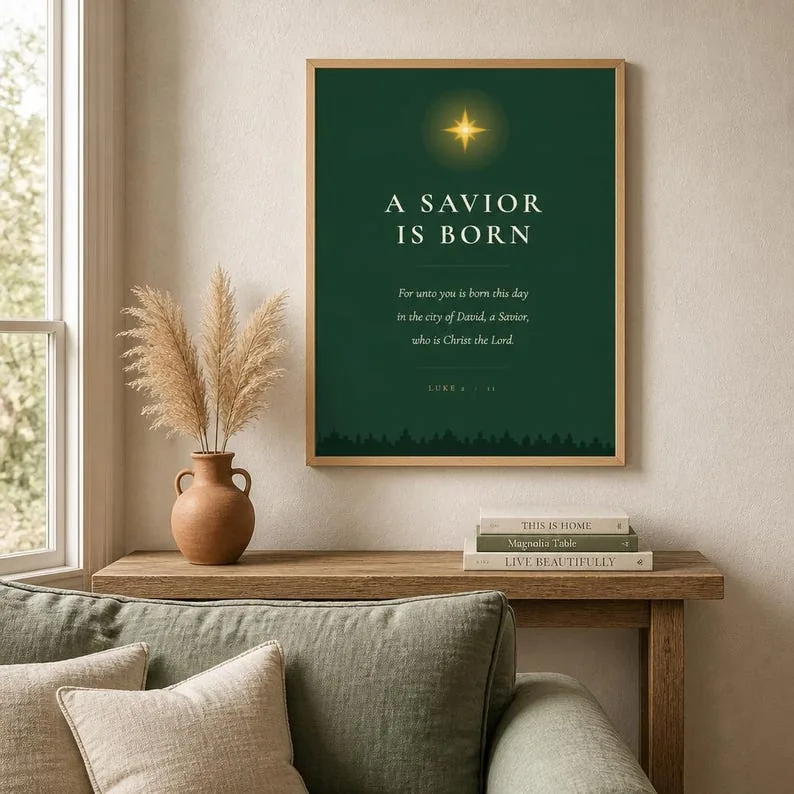
The angel calls the birth good news because the child is identified as Savior, Christ, and Lord, titles that gather rescue, promised kingship, and divine authority into one announcement. Luke 2:10 to 11 reads, "Fear not: for, behold, I bring you good tidings of great joy, which shall be to all people. For unto you is born this day in the city of David a Saviour, which is Christ the Lord." The words "unto you" make the message personal, while "all people" gives it a wide horizon. Christ means the anointed one, the promised ruler connected with Israel's hope. Savior describes one who delivers, and Lord expresses authority. Yet the sign is not a palace or military victory. It is "the babe wrapped in swaddling clothes, lying in a manger." Luke joins large claims to a small and accessible sign. The good news begins with fear answered by reassurance and with greatness revealed through a vulnerable child.
What does "peace on earth" mean in Luke 2:14?
Peace on earth in Luke 2:14 describes the peace associated with God's favor and the arrival of the promised Savior. In the KJV, the angels praise God with the words, "Glory to God in the highest, and on earth peace, good will toward men." Biblical peace is more than a quiet mood or the temporary absence of conflict. It carries the sense of wholeness, restored relationship, and life ordered under God's good purpose. The verse does not claim that violence and suffering ended on the night of Jesus' birth. Luke's own Gospel continues in a world marked by political power, poverty, rejection, and grief. Instead, the song announces what this birth means and where enduring peace is grounded. Glory belongs to God, and peace reaches toward earth. For readers at Christmas, the line can hold both promise and longing: gratitude for reconciliation made known in Christ, and a clear recognition that the world still waits for peace to be fully seen.

How does Isaiah 9:6 connect to the Nativity story?
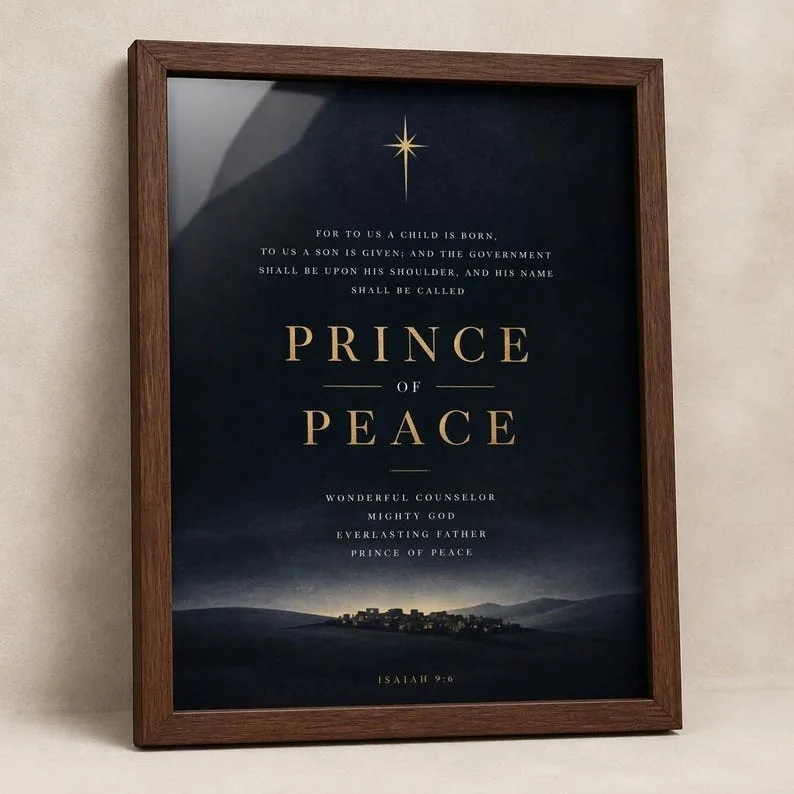
Isaiah 9:6 connects to the Nativity because Christians read its promised child and royal titles as pointing toward Jesus. The KJV says, "For unto us a child is born, unto us a son is given: and the government shall be upon his shoulder." It then names him "Wonderful, Counsellor, The mighty God, The everlasting Father, The Prince of Peace." In Isaiah's setting, these words speak hope into darkness and the threat of oppression. The child represents just rule and a peace unlike the violence surrounding the people. The New Testament does not quote this full verse inside Luke 2, so the connection comes from reading the wider biblical story together. Luke's child in David's city, announced as Christ the Lord, resonates strongly with Isaiah's royal promise. The titles do not function merely as seasonal names. They describe wisdom that guides, strength that saves, enduring care, and a reign directed toward peace.

Frequently asked questions
What is the main message of the Christmas story in Luke 2?
Luke 2 presents the birth of Jesus as good news of great joy. The promised Savior arrives in humble circumstances, and the first announcement reaches shepherds rather than political or religious elites. The chapter brings together God's glory, peace on earth, and a sign found in an ordinary manger.
Who heard the news of Jesus' birth first in Luke 2?
Shepherds keeping watch near Bethlehem receive the angelic announcement in Luke's account. After finding Mary, Joseph, and the child, they make the message known and return glorifying God. Their place in the story emphasizes that the good news is announced to working people in the middle of an ordinary night.
Is Isaiah 9:6 part of the Christmas story?
Isaiah 9:6 was written long before the Gospel accounts, but Christians have historically read its promised child and titles in relation to Jesus. It is not part of Luke's Nativity narrative itself. Rather, it provides prophetic language through which the birth in Luke 2 is understood.
Which Bible translation is quoted in this article?
All direct Bible quotations in this article are from the King James Version. Its familiar wording includes "good tidings of great joy," "on earth peace, good will toward men," and Isaiah's title "The Prince of Peace." Other translations may render some phrases differently.
Bring it to your wall
Nativity Set Printable: Christmas Story Scripture Gallery Wall Set of 9, Watercolor Bible Verse Prints, Isaiah 9 6 and Luke 2 Wall Art
Luke 2 11 Print: A Savior Is Born, Christmas Scripture Wall Art, Dark Green Bethlehem Star, Christian Christmas Decor
Peace on Earth Print: Luke 2 14 Christmas Scripture Wall Art, William Morris Botanical, Christian Christmas Decor